Linked Objects | Hoogtij #63 | Nov 27


artist initiative since 1992

Some of our artists and guests are taking off to Sarajevo Winter Festival. They will join our long-term collaborators, Nine Dragon Heads, in the occasion of their 25th anniversary.


Exhibition, performances and talks by Rosh Abdelfatah (NL/SY), Blanka De Bruyne (BE), Paul Donker-Duyvis (NL), Rodi Khalil (DE/SY), Dana LaMonda (UK/NL), Jessy Theo Rahman (NL/SUR), Ingrid Rollema (NL), Kito Sino (BE/SY), Pietertje van Splunter (NL).

Venues:
Collegium Artisticum, National Theater BiH, Bosnian Culture Center 36th International Festival Sarajevo / Winter Sarajevska Zima 2020 sarajevskazima.ba
Thanks to:

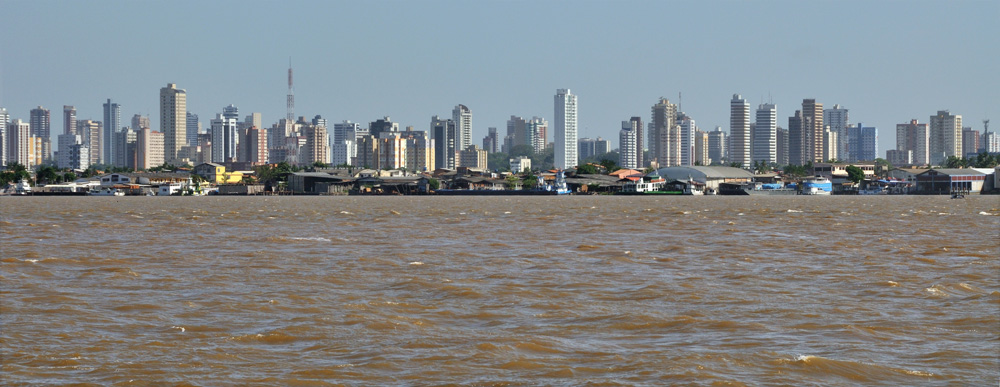

Jessy Rahman goes to Istanbul with Korean group Nine Dragon Heads, joining the parallel events program of the 15th International Istanbul Biennial, September 14th – October 4th, 2017.
About Nine Dragon Heads
The Environmental Art Symposium Nine Dragon Heads, was initiated in South Korea by Park, Byoung-Uk in response to the destruction of an important historical site in 1995, and has evolved from the specific eco-political motivation into an open, interdisciplinary platform where an association of artists from all over the world implement individual and collaborative art projects related to humanitarian, political, environmental and cultural issues.
The emergence of the environmental art initiative Nine Dragon Heads was inspired by concern over the natural, cultural, historical and archaeological landscape of South Korea and coincided with a period of industrial rise and profound political change. Arising in the context of economic and infrastructural development, South Korea was a country actively positioning itself on the global socio-political, educational, artistic and cultural scene.
The origins of Nine Dragon Heads are part of a distinct continuum of artistic development in Korea, beginning in the 1980s and 90s with a small group of artists (contemporaries of Park, Byoung-Uk) who wanted to consider artistic and philosophical problems outside of traditional Korean art forms and who were motivated to remain under the radar of the military regime and government control in place at that time. In that political environment a significant thread of South Korea’s contemporary art development took place in off-site projects, held within rural mountainous areas and remote natural sites.
During twenty years of activity Nine Dragon Heads has evolved out of specifically formative geo-political and art historical backdrops to investigate a broader range of transitional environmental, economic and political situations. A further important step for Nine Dragon Heads began in 2006 when it became actively nomadic. The large number of international artists who attended Nine Dragon Heads events through its formative years continually confronted the project with the kinds of conceptual considerations that arise in international conversations about the globalization of art practice and politics of locality. It was a natural progression for the project to begin to engage with other specific localities and their eco-political histories by traveling.
Working in locations with transitional characteristics that may be environmentally, economically and/or politically troubled, on important cultural, historical and geopolitical routes has become a particular feature of working within Nine Dragon Heads. It is noteworthy that Nine Dragon Heads is an inherently flexible model capable of responding perceptively and with focused spontaneity to the inevitably unexpected contextual conditions which occur within the immediate surroundings of each location the group is engaging with artistically.
Nine Dragon Heads has worked on locations throughout the South Korean Peninsula and its islands, including the Demilitarized Zone (DMZ) and Joint Security Area (JSA) between the North and South of Korea. Other areas recently engaged include Bosnia/Herzegovina, the South Caucasus; Georgia, and Central Asian locations; Uzbekistan, Turkey, China, Tibet and Mongolia. Past projects have also taken place in Switzerland, Australia, New Zealand and Brazil.
Read more on: http://9dh-istanbul.com


Quartair presents Twist to exist during the XXX Sarajevo Winter Festival 2014 – PAFF (Peace, Art Freedom)
7 – 20 February 2014, Sarajevo, Bosnia and Herzegovina
Artists: Gabriel Adams (USA), Marlies Adriaanse (NL), Gordana Andelic-Galic (BiH), Melissa Cruz Garcia (CO/NL), Ali Bramwell (NZ), Paul Buchanan (UK), Onno Dirker (NL), Paul Donker Duyvis (NL), Hannes Egger (IT), Mike Estabrook (USA), Jusuf Hadjifezovic (BiH), José den Hartog (NL), Birke Hesse (NL), Vandana Jain (IND/USA), Laura Pardo (CO), Byoung Uk Park (KR), Jessy Rahman (NL/SUR), Yong Gu Shin (KR), Pietertje van Splunter (NL).
Curator: Jessy Rahman


The exhibition is part of Nine Dragon Heads collateral events organized during the festival.

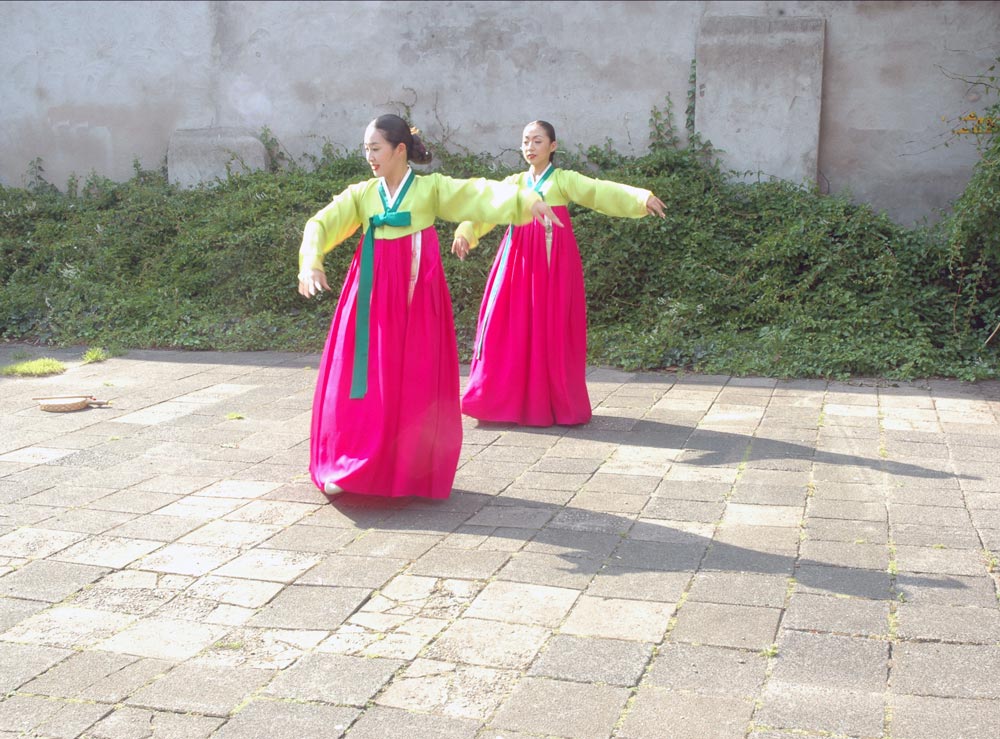
Nine Dragon Heads in Holland
14 t/m 22 juli 2007
On the occasion of the 100th year of Yi Jun’s death, Centennial Commemoration Ceremony: The International Peace Conference on Korea

Coordinator: Kim, Yi Sun/ Paul Donker Duyvis
Curator: Jessy Rahman
kunstenaars: Kim Jong-Gu, Lee Kwang-Ho, Kim, Hwa-Jin, Pang Hyo-Sung, Kam Yeon-Hee, Park Byoung-Uk, Chae Myung-Sook, Shin Yong-Gu, Choi Suk-Un, Yoo Joung-Hye, Lee In, Chummuri Dance Company

‘Meeting Downhill’ is an exchange project between Nine Dragon Heads and Quartair. See also ‘Come Ashore‘ with Dutch artists in Korea.
Nine Dragon Heads | International Environment Art Symposium | South Korea
Elizabeth de Vaal, Thom Vink, Paul Donker Duyvis, José de Hartog, Jessy Rahman, Erik-Jan Ligtvoet, Rachel Bacon, Harold de Bree, Geeske Harting en Pietertje van Splunter
NL
Een beroemde Nederlander in Korea is Hendrik Hamel. Hij leed schipbreuk met het schip “ De Sperwer” in Korea rond 1653.De koreanen wilde de bemanning van het schip niet laten gaan, ze werden goed behandeld maar wel vastgehouden in Korea.Na 13 jaar wisten Hamel en zijn mannen te ontsnappen en keerden via Japan weer terug naar Nederland, waar hij zijn avontuur opschreef.Onder andere hierdoor werd Korea in het westen bekend. Dit was het begin van contact tussen Korea en “het Westen” met handel, religie.militaire invasies, het kapitalistische systeem en de westerse populaire cultuur.
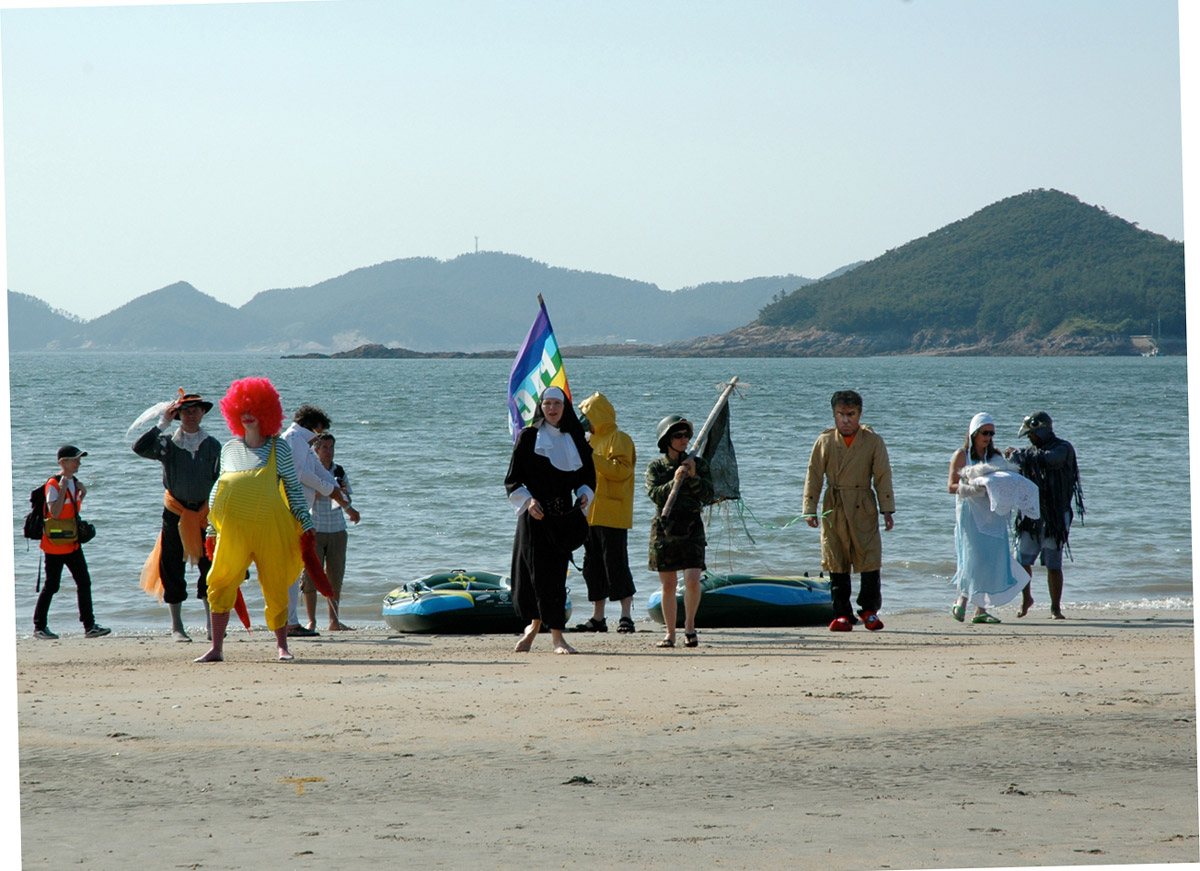
De performance ‘Come Ashore’ is de verbeelding van de westerse invasie van Korea. Op het strand landden de protagonisten van de handel, religie, het leger, en de westerse cultuur.Een non, een soldaat, Hendrik Hamel, Ronald mc Donald, Hidding (beroemde nederlandse voetbalcoach in Korea), Elvis Presley etc. “Come Ashore’
EN
A famous Dutchman in Korea is Hendrik Hamel. He was shipwrecked with the ship “De Sperwer” in Korea around 1653. The locals did not want to let the crew of the ship go. After 13 years, Hamel and his men managed to escape and returned to the Netherlands where he wrote down his adventure. Partly because of this, Korea became known in The West. This was the beginning of contact between Korea and ‘The West’ with trade, religion, military invasions, the capitalist system and western popular culture.
The performance ‘Come Ashore’ is the representation of the western invasion of Korea. On the beach landed the protagonists of trade, religion, the military, and Western culture.
We see a nun, a soldier, Hendrik Hamel, Ronald McDonald, Mr. Hidding (famous Dutch football coach in Korea), Elvis Presley etc.
‘Come Ashore’ is an exchange project between Quartair and Nine Dragon Heads. See also ‘Meeting Downhill‘ with Korean artists in The Hague.