Van Damascus naar Den Haag

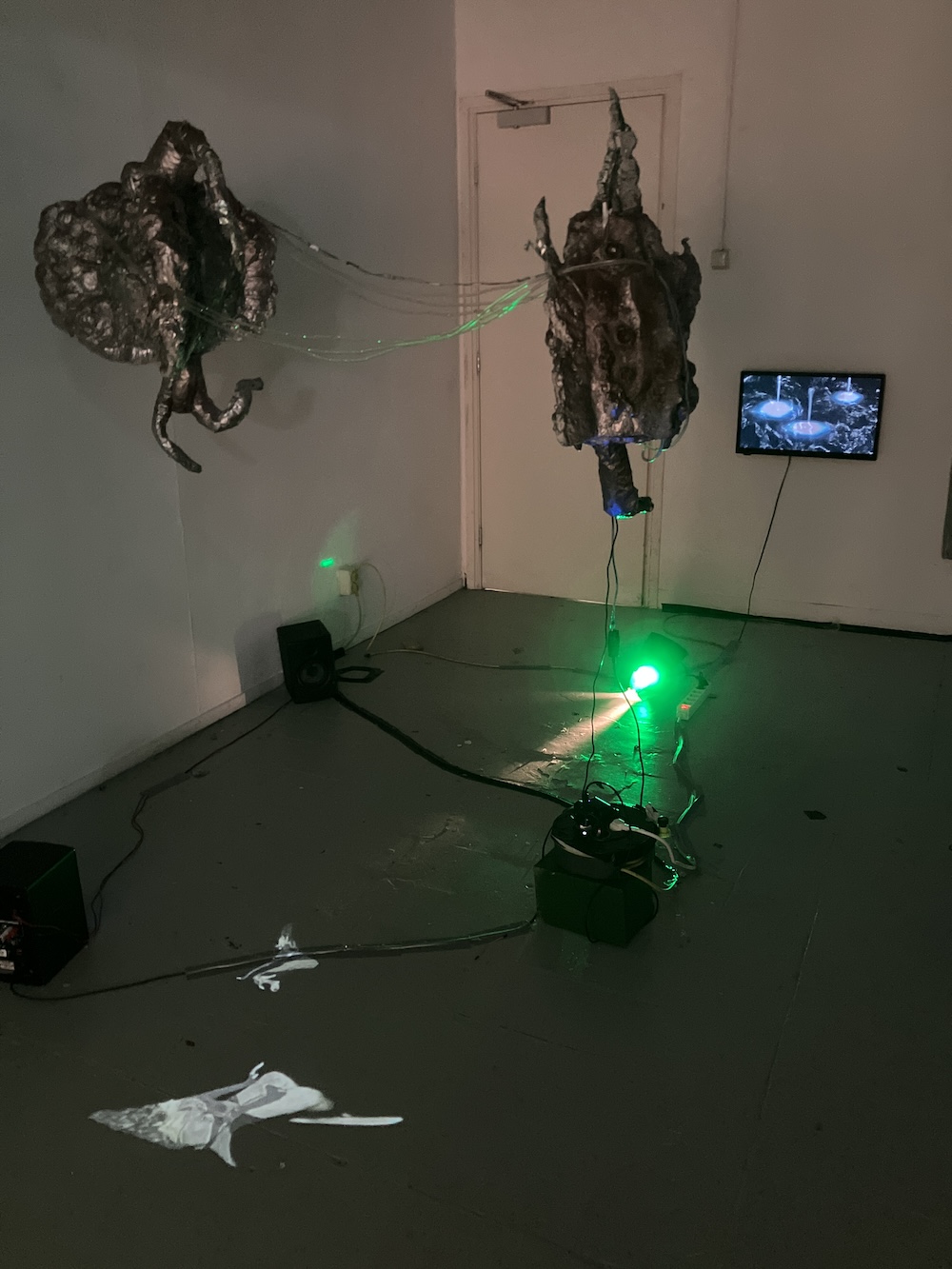
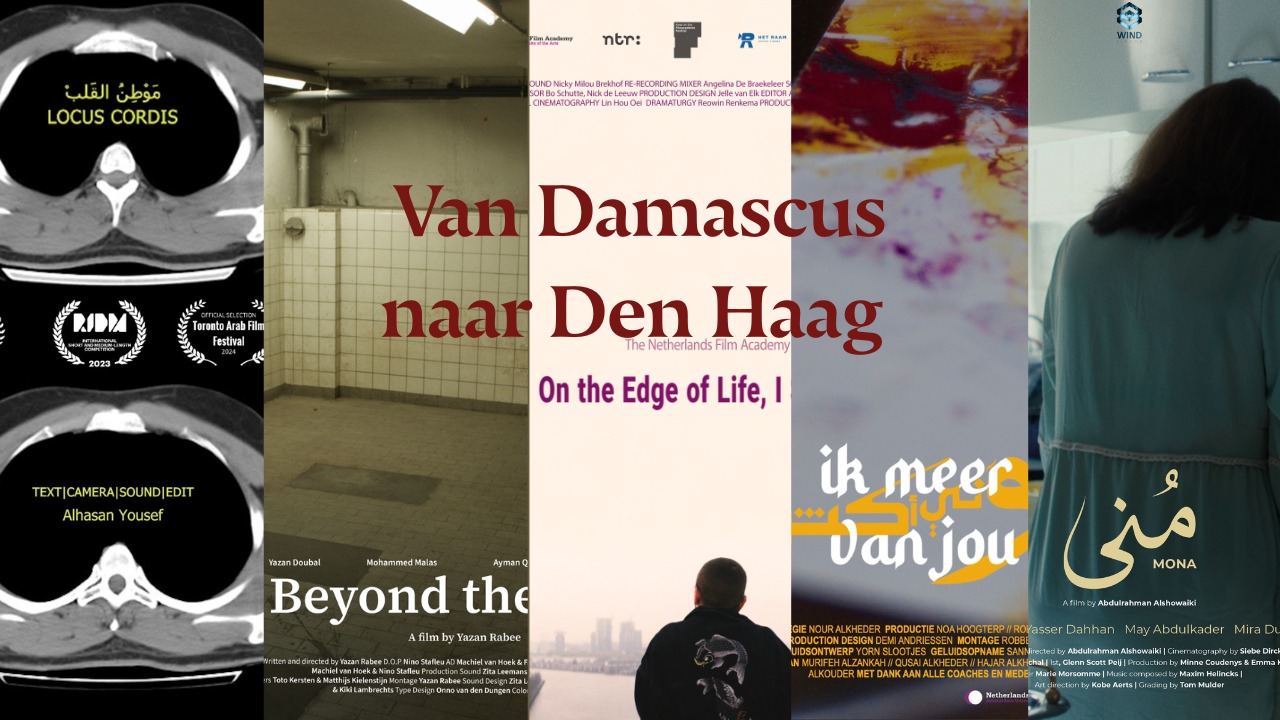
Tijdens Van Damascus naar Den Haag organiseren we een driedaagse workshop met Syrische kunstenaars en deelnemers met een Syrische achtergrond. Beeldende kunst, video art, muziek en schilderkunst komen samen in een gezamenlijk creatieproces.

Gedurende drie dagen werken de deelnemers samen aan één collectieve installatie rond het thema rechtvaardige transitie. Het werk wordt gevoed door poëzie, korte films en groepsgesprekken. Deze momenten van uitwisseling en reflectie vormen de inspiratiebron voor de artistieke ontwikkeling van de installatie.

De workshop biedt ruimte voor ontmoeting, verbeelding en gedeelde verhalen. Kunst wordt hier gebruikt als middel om ervaringen te delen, vragen te stellen en samen na te denken over toekomst, herinnering en rechtvaardigheid.

Op 8 maart wordt de gezamenlijke installatie gepresenteerd aan het publiek. Na de iftar, om 19.00 uur, openen we de expositie met live muziek en optredens. Het resultaat is een moment van samenzijn, waarin kunst, cultuur en dialoog samenkomen.


During “From Damascus to The Hague,” we are organizing a three-day workshop with Syrian artists and participants with a Syrian background. Visual art, video art, music, and painting will come together in a collaborative creative process.

Over these three days, the participants will collaborate on a single collective installation around the theme of just transition. The work will be informed by poetry, short films, and group discussions. These moments of exchange and reflection will inspire the installation’s artistic development.

The workshop offers a space for encounters, imagination, and shared stories. Art will be used as a means to share experiences, ask questions, and reflect together on the future, memory, and justice.

The collaborative installation will be presented to the public on March 8th. After the iftar, at 7:00 PM, we will open the exhibition with live music and performances. The result is a moment of togetherness, where art, culture, and dialogue converge.

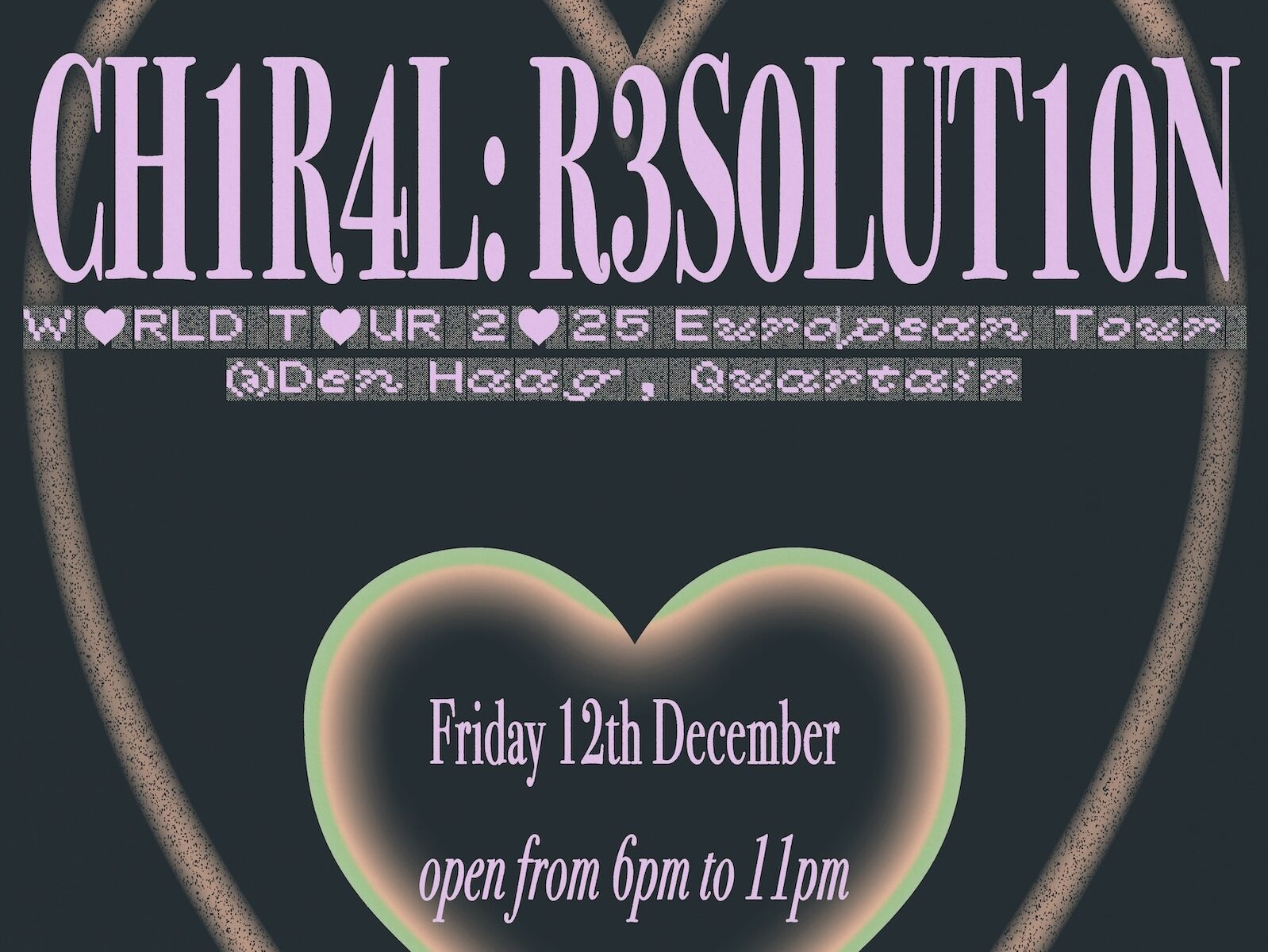
ESC 2035 (I): the world paused.

Opening Friday, January 9, from 5–8 PM
Exhibition from 9 to 24 January 2026
Open hours Thursday through Saturday, 14:00–18:00

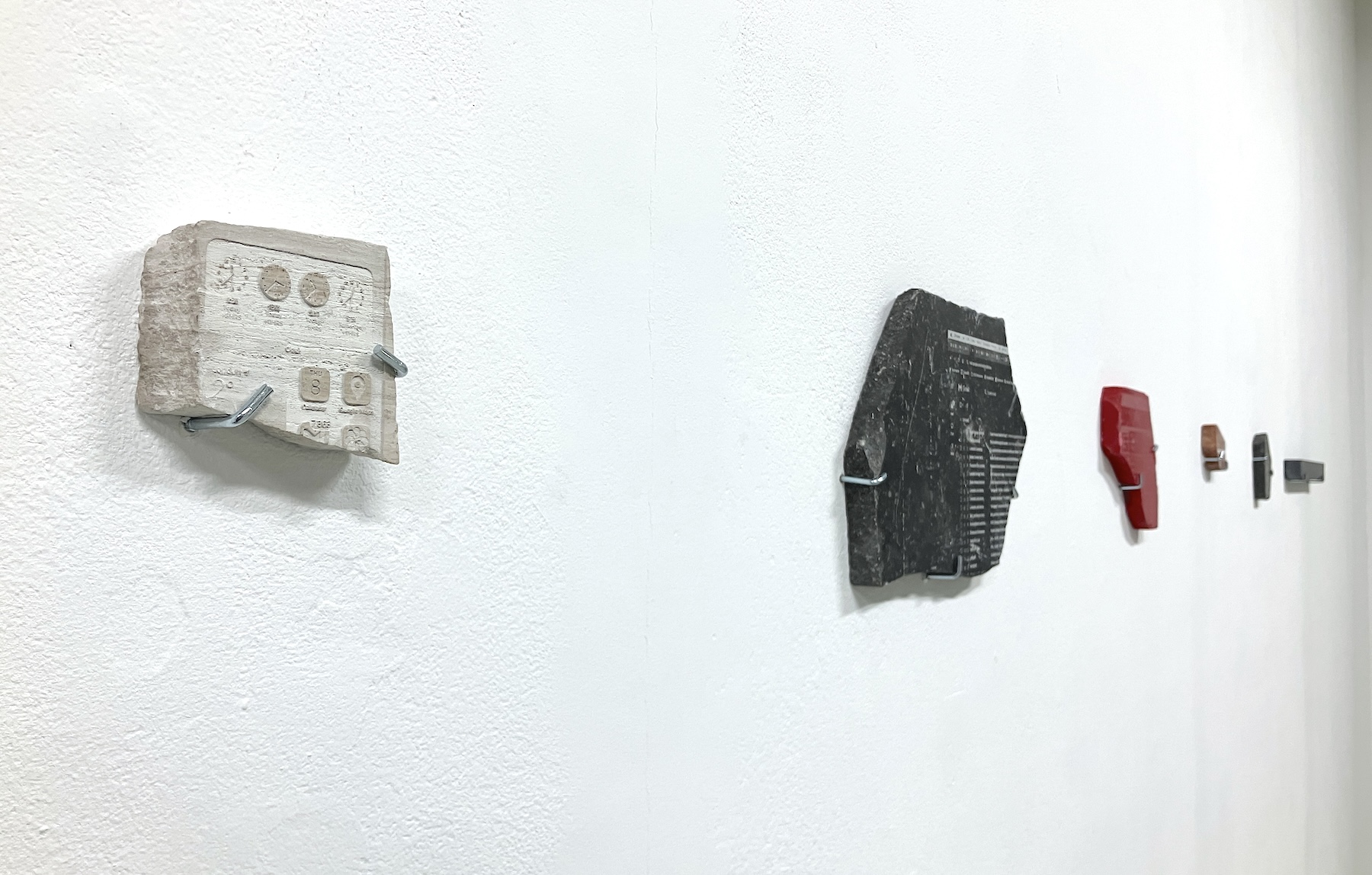
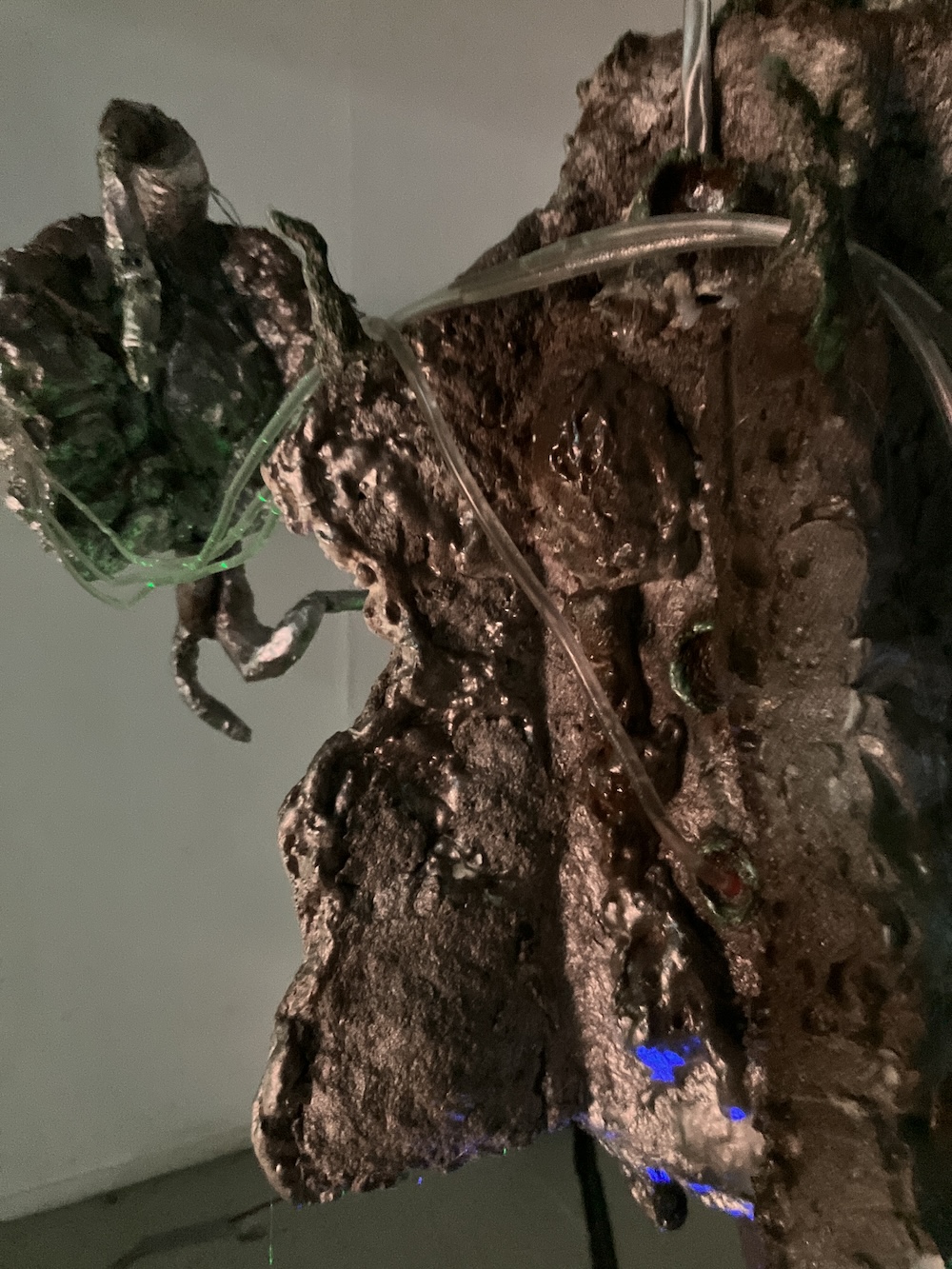
What happens when the systems we build keep running, but we are no longer there? The first chapter of the ESC 2035 trilogy explores a world in suspension. Featuring works by 8 artists, the exhibition captures a weather report of a future where technology is a landscape of dust, signals, and fossilized interfaces.

Building on the themes of ESC 2034, this chapter looks at the residue we leave behind — from sound circuits to neon warmth — asking what remains when presence is absent.


… the world paused. 

Nobody’s here, but something still is. The systems haven’t shut down completely: screens, wiring, dust, and light still translate motion, heat, and air into tone.


Participating artists: Francesco Zedde, Junya Li, Laury Hooghuis, Maria Esteve Trull, S. Mercure, TJ (Tianju) Chen, Tobias Krämer, Todd Clare

This is the second show curated by 0–1.gallery at Quartair. 0–1 is a nomadic contemporary art platform that moves how it needs to — tech-aware, a bit restless, and always asking why. Since 2017,  0–1 has been shaped by artists who keep things in motion, not there for fixed ideas. There are no walls, no permanent fixtures, but a stubborn curiosity, and the need to explore issues that matter. Read more on: 0–1.gallery.

Head image: work by Junya Li

ESC 2034 (III): Roaring Into Being

installation by Johannes Thiel

Exhibition from 18 October – 1 November, 2025
Opening Saturday, October 18th at 16:00
Exhibition hours Wednesday–Saturday, 13:00–17:00

Roaring Into Being is an exhibition by 0—1.gallery, a nomadic contemporary art platform existing since 2017. This is the third and concluding exhibition in their series ESC 2034.

Roaring Into Being looks at the convergence of the synthetic and the organic. The exhibition moves between the rumble of machines, the resonance of nature, and the shifting terrains of digital evolution. Each work reflects on humanity’s changing relationship with technology — its imprint on the environment, the body, and ways of seeing. Some works treat ecology as metaphor, others as method — erasing the divide, questioning interdependence, and tracing the fragile systems we inhabit.

With works by: Andrea Samory, Chang Hsin Yu, David Bowen, Egosito, Johannes Thiel, Lotta Stöver, Maxime Lechêne, Sophia Gatzkan

Across the exhibition, technology appears not as future, but as a condition — embedded, felt, and already altering what it means to be physical, connected, or alive.

Concluding a conceptual trilogy, Roaring Into Being marks the final phase of ESC 2034 evolving study into digital futures, tracing a trajectory from subtle machine-nature interactions to a world shaped almost entirely by technology.

About 0—1.gallery
0—1.gallery is a contemporary nomadic curatorial platform that moves how it needs to — tech-aware, a bit restless, and always asking why. Since 2017, it has been shaped by artists who keep things in motion — not there for fixed ideas of what art is supposed to be. No walls, no permanent fixtures, stubborn curiosity, and the need to say something that matters.

Read more on: 0-1.gallery/exhibitions/esc-2034-roaring-into-being

work by Andrea Samory

The works trace how technology settles into matter, gesture, and atmosphere. Andrea Samory turns screen-born imagery into sculpted bodies with faint echoes of myth; David Bowen builds instruments that let natural signals steer machines; Egosito tunes friction and timing into mechanical rhythm; Sophia Gatzkan looks at bodies shaped by support structures and prosthetic cues; Maxime Lechêne studies components that follow use and airflow; Johannes Thiel constructs soft systems that move like tools learning to behave; Lotta Stöver works through sensors and small circuits to study how data frames attention; and Chang Hsin Yu translates motion and environment into sound, letting space compose itself. Together, these practices outline a world where digital and physical processes shape one another at close range. – 0—1.gallery

Chang Hsin Yu

Waiting Field

Waiting Field is an exhibition of immersive video installations by four emerging artists exploring the intersection of cinema and visual art. Like a field shaped by time and subtle shifts, the exhibition reflects on waiting – as a condition, a space, and a method –where images and meanings slowly take form.

Featuring works by Alexandra Pavlovskaya-Lokchine, Kimia Khedri, Michał Kucharski, and Lyy Raitala.

Opening: Friday, 6 June from 19:00 to 23:00
Exhibition hours: from Saturday 7 June to Tuesday 10 June, 13:00-19:00 and Wednesday, 11 June, 13:00-16:00

The title Waiting Field refers to a space that is both literal and metaphorical – a place shaped by time, transformation, and anticipation. The exhibition reflects the temporal nature of video and the quiet tension of waiting: for meaning, for resolution, for something to emerge.Working in the undefined space between film and visual art, each artist approaches video not just as a storytelling device but as a sculptural, spatial, and conceptual medium. Their works explore the thresholds between reality and fiction, absence and presence, stillness and movement.

Kimia Khedri (b. 2003, Tehran, Iran) is a visual artist based in The Hague. She investigates disorientation, memory, and the invisible connections between identity and place.

Alexandra Pavlovskaya-Lokchine (born 2002 in Moscow, Russia) is a visual artist and cinematographer based in the Hague and in Paris. She captures suspended moments — foggy landscapes, deserted alleys — where time feels paused and memory lingers.

Michał Kucharski (born in 1997 in Krakow, Poland) is a visual artist based in The Hague, working primarily with videography and photography. With his work, he approaches the medium as a sculptural object, examining how narratives unfold through space and tension.

Lyy Raitala (1999) is a Finnish lens-based artist living in the Netherlands. She constructs surreal, fragmented scenes drawn from everyday life, using humor and subtle interventions to destabilize the familiar.

Together, these works form a shared terrain – a waiting field – where the moving image becomes a site of reflection, transformation, and encounter.

Graphics and poster by Lucy Gengler.


With thanks to Amarte Fonds

[seventeen frequencies] ArtScience Preview

From April 11th to 13th, 2025, the graduating class of the ArtScience Interfaculty will present [seventeen frequencies], a three day exhibition taking place at two locations, Quartair and Paradise (Groenewegje 136).

Opening hours:
Friday, April 11 from 7PM to 11PM
Saturday, April 12 from 12 to 10PM
Sunday, April 13 from 10AM to 6PM

Participating artists from ArtScience exhibiting at Quartair:
Omer van Soldt @vogonxpoetry
Laura A Dima @lauraadima
Anaïs Lossouarn @anaislossouarn
Jedrek Eltman @jedrek.eltman
Lola C. Brancovich @lolachevyy
Anne Zarske @anne.zarske
Tom de Kok @didymus.artist
Charlotte Roschka @corcarlotti
Levi Kramer

The ArtScience Interfaculty offers an interdisciplinary bachelor’s and master’s programme that fosters curiosity driven research as an approach for the making of art. The programme considers art and science as a continuum and promotes the development of new art forms and artistic languages. The ArtScience Interfaculty is embedded in both the Royal Conservatoire and The Royal Academy for Fine Arts in The Hague, The Netherlands. Read more on: interfaculty.nl

Proximity Music: ‘Fluid Anatomy’ by Ioana Vreme Moser

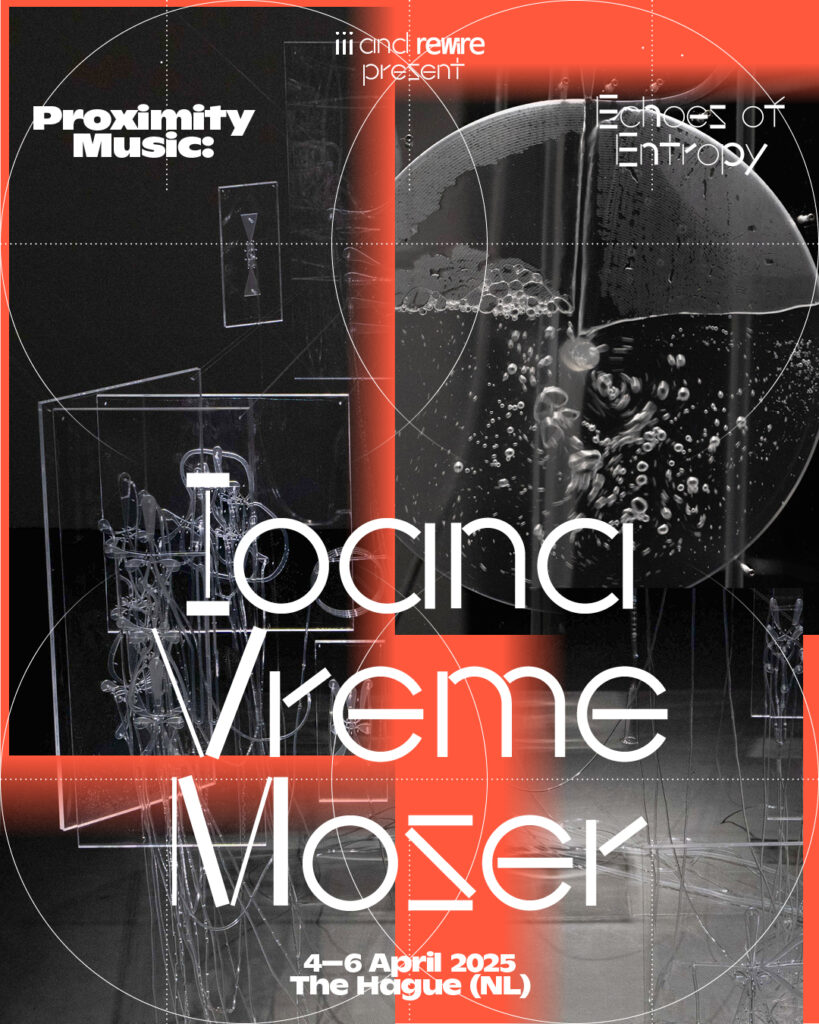
During Rewire Festival (April 4-6), once again Quartair will host the joint exhibition program by iii, Proximity Music: Echoes of Entropy. For this year, iii has selected artist Ioana Vreme Moser to present Fluid Anatomy at our project space.

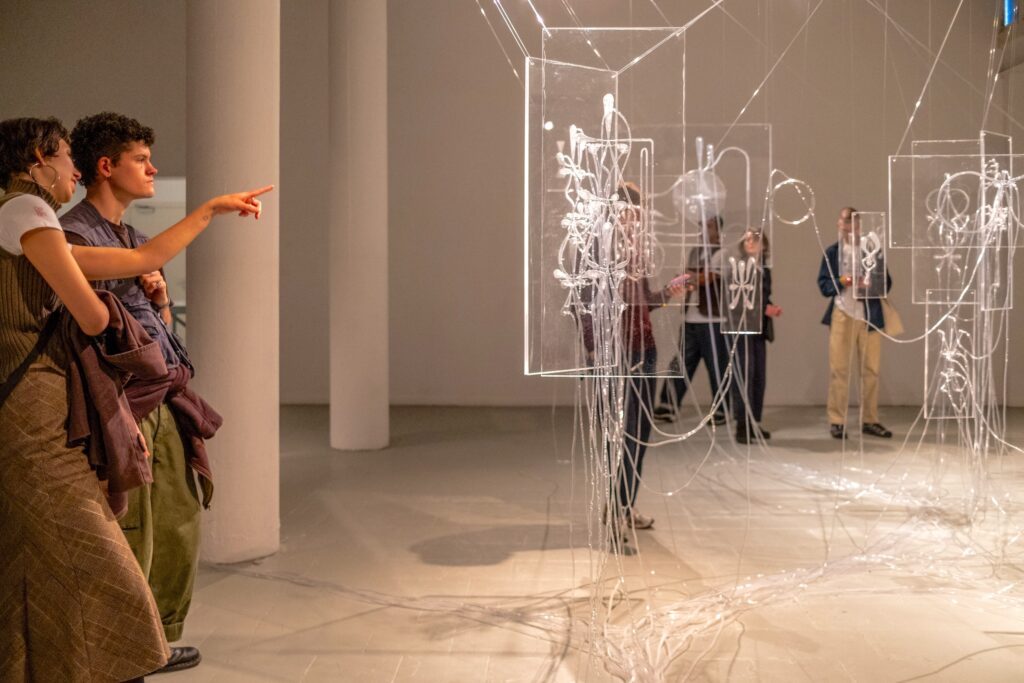
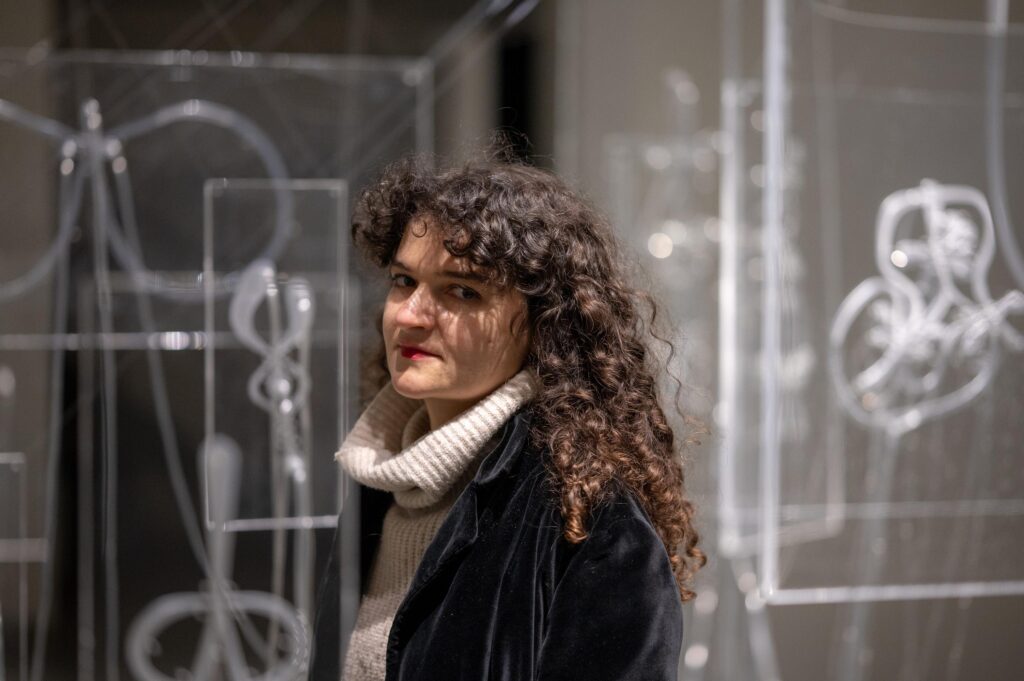
installation ‘Fluid Anatomy’ by Ioana Vreme Moser. Photo by Dana LaMonda

Powered entirely by water and air, Ioana Vreme Moser’s Fluid Anatomy uses oscillators, valves, pumps, and connecting hoses to create a dynamic analogue installation responding to the environment of Quartair. Taking inspiration from mid-twentieth century “liquid computers” (powered by the flow of liquids), Vreme Moser highlights the beauty and resilience of this alternative computational model to question present-day technological narratives. As the installation passes from one rhythmic pattern to another, the public is invited to walk amongst fragile fluidic bodies and experience the intriguing play of forms and sounds that water and air produce.

Ioana Vreme Moser is a Romanian sound artist interested in hardware electronics, speculative research, and tactile experimentation. In her practice, she uses rough electronic processes to obtain different materialities of sound. She places electronic components and control voltages in different situations of interaction with her body, organic materials, and environmental stimuli. Vreme Moser’s works feature personal narrations and observations on the history of electronics, and their production chains, wastelands, and entanglements in the natural world.

The installation is produced and curated by singuhr projekte, with support of Musikfonds, Bezirksamt Pankow, Berlin. Technical support: Dorian Largen, Jan Rohmer, FabLab.ro. And special thanks for research support: Benjamin Bühling

Proximity Music: Echoes of Entropy presents a series of works that help us understand how chaos and entropy act as forces of creation and catalysts for change while critically examining their impact on our present-day world. Drawing inspiration from the second law of thermodynamics, where entropy signifies the inevitable drift towards disorder, the artists delve into the consequences of these forces on our environment, socio-political systems, and human interactions. Taking these complex and ephemeral relationships as their starting point, the participating artists make chaos tangible by navigating the complex interplay between disorder, chance, and creation. Rather than evoking fear, the works embrace unpredictability and the beauty of uncontrollability. Curated by Yannik Güldner, featuring works by Zimoun, Navid Navab, Natalia (Nika) Sorzano, Ioana Vreme Moser, Coralie Vogelaar, Chris Salter & Marije Baalman, Aura Satz.

Entrance to the Proximity Music exhibition is free. Opening hours: from 12:00 to 20:00.

Proximity Music is the joint exhibition program initiated by iii and Rewire. It seeks to connect music, architecture, technology, ritual, and play through physical experiences engaging with all the senses.

Full info: instrumentinventors.org/agenda/proximity-music-echoes-of-entropy

Garden of Aether

An evening where Adam Centko shared his latest project, commissioned by Slagwerk Den Haag. Drinks and bites designed by Trang Ha and Alejandra Lopez Martinez. DJs: Andre Miranda and Ola Rubik.

“Garden of Aether” is a simulation artwork that combines 3D aesthetics, game engine mechanics, and sounds by Slagwerk Den Haag to create a conceptual narrative dealing with sustainability and reflecting on the invisible infrastructures that fuel the digital environments.

Adam intended to create a new kind of moving image, one that will be ever-changing and never the same, but also keeps moving image structure and has a beginning and end. The medium of a computer simulation is about giving up control and actively becoming an observer. The confined digital landscape and the physical hardware give the viewer a unique perspective that draws analogies from the world around them. The mechanics of the simulation are inspired by the Anthropocene. As long as the characters keep producing sculptures and altering the natural environment, the temperature will keep on rising. Unfortunately, that’s exactly what the characters are programmed to do.
The sculptures that the NPCs build are not only visual, but each one also contains a sonic element designed by Frank Bink, a member of SDH. These sonic elements populate the landscape and are accurately delivered to the viewer using a quadraphonic speaker setup. Each new sculpture introduces a new sample, creating a cacophony of three-dimensional sounds. The landscape then becomes both visually and sonically saturated.

The project is developed in Unreal Engine 5. The 3D assets have been created using VR sculpting, Blender, and Substance Painter. The hardware is placed within a custom-built PC case, which has been laser-cut from an aluminum sheet and then bent into the shape of a rib cage.

Centko is a lens-based artist observing the intricate workings of our ecosystem. Specifically zooming in on the role of technology in the nature as a whole, Adam believes that the relationship between nature and tech isn’t binary, but rather that even the most advanced human feats are just extension of nature. He strives to shine light on this connection using various media such as video and 3D animation. The artist is currently supported by the Stimuleringsfonds Talent Development Grant. Adam Centko thanks the support of Trang Ha, Carmen Roca Igual, Laimonas Zakas and Mike Rijnierse at Quartair, October 13th, 2022.

Concept/3D art Adam Centko
Lead development Eusebi Jucglà
Audio Samples Frank Bink
Production David Veneman
Typeface (Tonka) Celine Hurka
Website Manus Nijhoff
3D modeling Samuel Rynearson
Commissioned by Slagwerk Den Haag

Read more on:
garden-of-aether.com
adamcentko.com

Killing Horizons | ArtScience masters

June 7-9 2019
Performances and installations by first year masters of the ArtScience Interfaculty, KABK/KonCon.

Turbulence: performance by Mint Park

Participants: Felix Bodin, Gabriela Acha, Timoteo Carbone, Alexander Heil, Ian Ouros, Berk Özdemir, Mint Park, Lianne van Roekel, Daan Westerheide, Iva Berkovic.

Gabriela Acha: video still
installation Lianne van Roekel. Photo by Dana LaMonda